

Bangladesh has one of the youngest populations in Asia. Millions of young people enter the job market every year. For them to find good work and earn a stable income, they need education and practical skills. That is where education and training services become critical.
A skilled workforce makes businesses more productive. It helps industries grow. It supports exports, attracts investment, and raises living standards. Without trained workers, factories cannot operate efficiently, hospitals cannot provide quality care, and technology companies cannot develop products.
Bangladesh has made significant progress in expanding access to education over the past few decades. Primary school enrollment is near universal. Secondary and higher education has grown. Vocational and technical training programs have expanded. And digital learning platforms are reaching people who could not access traditional institutions.
Yet challenges remain. Many graduates lack practical workplace skills. Industry demand often does not match what training programs teach. And rural communities still have limited access to quality education services.
This article explains how education and training services are empowering Bangladesh’s workforce. It covers the types of programs available, their role in the economy, and what the future holds for skills development in Bangladesh.
What Is Skills Training Bangladesh and Education Services?
Skills training in Bangladesh refers to programs that teach people practical abilities needed for work. These go beyond classroom learning. They focus on doing — using tools, following processes, solving real problems, and applying knowledge in a job setting.
Education services is a broader term. It covers all forms of learning institutions and programs — from primary schools to universities, from short vocational courses to professional certification programs.
Together, skills training and education services form the foundation of human capital development in Bangladesh. Human capital refers to the knowledge, skills, and health that workers bring to the economy. Strong human capital makes a country more productive and competitive.
Key types of skills training in Bangladesh include technical and vocational education, industry-specific training, soft skills development, digital literacy programs, and on-the-job training provided by employers.
Education services include formal schooling, higher education, professional development courses, online learning, and non-formal education provided by NGOs and community organizations.
According to the World Bank, investing in human capital is one of the most effective ways for developing countries to accelerate economic growth and reduce poverty.
History and Background
Bangladesh’s education system has roots in the British colonial period. Schools and colleges established under British rule formed the early base of formal education. After the partition of British India in 1947, the region became East Pakistan. Education was largely in Urdu and English, with limited investment in local institutions.
After independence in 1971, the new government of Bangladesh made education a national priority. Schools were nationalized. Bangla became the medium of instruction. Literacy campaigns were launched to address widespread illiteracy.
In the 1980s and 1990s, significant progress was made in primary education. NGOs like BRAC played a transformative role. BRAC’s non-formal primary education program reached millions of children in rural areas who were outside the formal school system. This was one of the largest non-state education interventions in the world.
The government introduced compulsory primary education and provided free textbooks to primary students. Female enrollment in primary and secondary schools rose sharply. Bangladesh became known internationally for its success in achieving gender parity in school enrollment.
Vocational education and training (VET) began developing in the 1990s and 2000s. The Bangladesh Technical Education Board (BTEB) was established to regulate and certify technical and vocational programs. Polytechnic institutes and vocational training centers expanded across the country.
In the 2010s, the focus shifted to quality and relevance. It became clear that simply increasing enrollment was not enough. Graduates needed skills that matched what employers actually needed. Industry-linked training and competency-based education became priorities.
Current Situation in Bangladesh
Today, Bangladesh has a large and complex education and training system. It includes thousands of primary and secondary schools, hundreds of colleges and universities, and a growing number of vocational and technical institutes.
At the higher education level, Bangladesh has over 50 public universities and more than 100 private universities. Dhaka University, Bangladesh University of Engineering and Technology (BUET), and Chittagong University are among the leading public institutions. Private universities like BRAC University, North South University, and Independent University Bangladesh (IUB) serve a large share of higher education students.
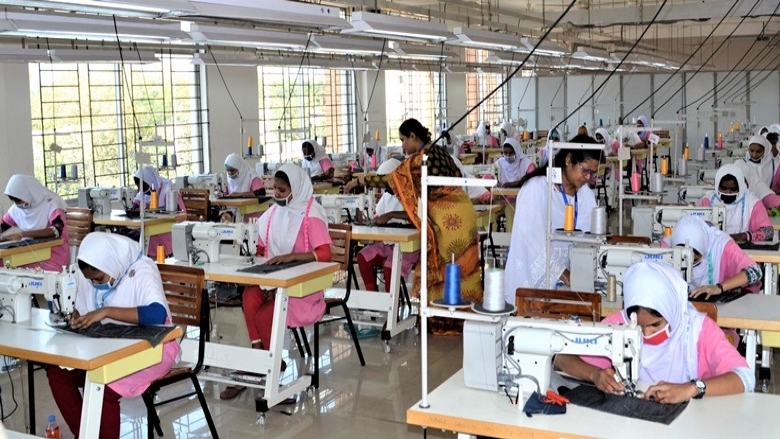
The vocational education sector has grown significantly. The Bangladesh Technical Education Board (BTEB) oversees technical and vocational education and training (TVET). Institutions include polytechnic institutes, vocational training institutes (VTIs), and technical school and colleges (TSCs). These programs train students in fields like electrical work, construction, garment production, automotive repair, and computer operation.
The National Skills Development Authority (NSDA) was established to coordinate skills development across the country. It works with government ministries, training institutions, and the private sector to align training programs with labor market needs.
International organizations including the International Labour Organization (ILO), the World Bank, Asian Development Bank, and various bilateral donors support skills development programs in Bangladesh. These programs focus on improving training quality, certification systems, and employment outcomes.
Online learning has grown in recent years. Platforms like Shikho, 10 Minute School, and various international platforms offer courses to Bangladeshi students and professionals. Mobile internet penetration has made online learning more accessible.
Business and Economic Importance
Education and skills training have direct and measurable effects on Bangladesh’s economy.
Workforce Productivity: Trained workers produce more output in less time and with fewer errors. A factory worker who understands machine operation, safety procedures, and quality standards will outperform an untrained one. This productivity gain multiplies across an entire industry.
Supporting the Garment Sector: Bangladesh’s garment industry is the country’s largest export earner and employer. The sector employs over four million workers, the majority of whom are women. Training programs focused on garment production, quality control, and machine operation directly support this industry’s competitiveness. As the industry moves toward higher-value products and automation, more skilled workers are needed.
Growing the IT and Technology Sector: Bangladesh’s IT and software sector is growing. The government has promoted the country as a digital services hub. Skilled programmers, software developers, data analysts, and IT support professionals are in demand. University computer science departments and private coding academies are producing talent for this sector.
Healthcare Workforce: Bangladesh needs more trained nurses, paramedics, medical technologists, and community health workers. Training programs in healthcare directly affect the quality of services available to the population.
Supporting Remittance Income: Millions of Bangladeshis work abroad — in the Middle East, Southeast Asia, and beyond. Their remittances are a major source of foreign currency. Workers with certified skills and recognized qualifications earn higher wages abroad. Skills training before migration improves earning potential and protects workers from exploitation.
Enabling Female Workforce Participation: Education and skills training are powerful tools for increasing women’s participation in the workforce. Female-focused vocational programs, literacy campaigns, and scholarships have helped many women enter industries they previously could not access. This expands the productive capacity of the economy.
According to Trading Economics, Bangladesh has maintained strong GDP growth. Human capital investment is recognized as a key factor behind this sustained performance.
Key Components and Types
Formal School Education
Primary and secondary education forms the base of workforce development. Students learn foundational skills — reading, writing, mathematics, and basic science — that they need for further education and employment. The government provides free primary education and textbooks to all students.
Higher Education
Universities and colleges provide undergraduate and postgraduate degrees. Key fields include engineering, business, medicine, computer science, law, and education. Higher education graduates typically enter professional and managerial roles in the economy.
Technical and Vocational Education and Training (TVET)
TVET programs teach practical, hands-on skills for specific trades and occupations. Programs cover areas like electronics, construction, welding, plumbing, textile production, tailoring, food processing, automotive repair, and computer operation. TVET programs are shorter than university degrees and lead directly to employment.
Industry-Specific Training Programs
Many industries run their own training programs. Garment factories train new workers on specific machines and production processes. Banks train new recruits on financial products and customer service. IT companies run internal technical training. These programs are highly practical and immediately applicable.
Professional Certification Programs
Professional certification programs are short, specialized courses that give workers credentials in specific areas. Examples include accounting certifications (like ACCA or CMA), project management certifications, digital marketing courses, and English language proficiency programs. These are popular among working professionals seeking career advancement.
NGO and Non-Formal Education Programs
NGOs like BRAC, Grameen Trust, and others run non-formal education and skills programs targeting rural communities, women, youth, and marginalized groups. These programs often combine literacy training with livelihood skills — teaching participants to sew, raise poultry, or manage small businesses.
Online and Digital Learning
Online platforms now offer courses in a wide range of subjects. Shikho and 10 Minute School are Bangladesh-based platforms widely used by students. International platforms like Coursera, edX, and YouTube provide access to global content. These platforms are particularly important for self-learners and working professionals.
Pre-Departure Migration Training
Before going abroad for work, Bangladeshi migrants can attend pre-departure orientation programs. These programs cover workers’ rights, workplace safety, contract terms, and basic language skills for the destination country. Better-informed workers fare better abroad and send more remittances home.
Market Trends in Bangladesh
Several important trends are shaping skills training Bangladesh and education services.
Growth of Private Training Providers: Private training institutes, coaching centers, and professional academies are growing rapidly. Many focus on IT, English language, and vocational skills. They fill gaps left by the formal education system and respond faster to industry demand.
Digital Learning Adoption: Mobile internet access has expanded access to online education. Students in smaller towns and rural areas can now access quality content that was previously unavailable to them. Video-based learning, recorded lectures, and interactive quizzes are popular formats.
Industry-Education Partnerships: More companies are partnering with universities and training institutes to co-design curricula, offer internships, and fund scholarships. This helps align training with actual workplace needs. BRAC University, for example, has active industry connections across multiple departments.
TVET Expansion: The government and development partners are investing in expanding TVET capacity. New polytechnic institutes are being built in districts that previously lacked them. Quality standards are being raised through better teacher training and updated equipment.
Women’s Skill Development: Programs targeting women’s economic participation are a major trend. Government initiatives, NGO programs, and international development projects specifically train women in marketable skills — from garment stitching to digital marketing and entrepreneurship.
Overseas Employment Preparation: With large numbers of Bangladeshis seeking work abroad, training for overseas jobs has become a specific market segment. Language training, skills certification, and cultural orientation programs for workers going to Saudi Arabia, Qatar, the UAE, Malaysia, and other destinations are all growing.
Opportunities
The education and training sector in Bangladesh presents strong opportunities for growth and investment.
Private Training Institutes: There is high demand for quality vocational, technical, and professional training. Private investors can establish training centers in underserved districts, focus on high-demand fields, and partner with employers for job placement.
Ed-Tech Platforms: Digital learning platforms have a large and growing market in Bangladesh. With millions of students and young professionals looking for affordable, accessible education, technology-driven education products have strong commercial potential.
Corporate Training Services: As Bangladeshi companies grow and professionalize, demand for employee training services is increasing. Corporate training firms offering leadership development, customer service, technical skills, and compliance training can find a growing client base.
Healthcare Training: With a shortage of trained healthcare workers, there is strong demand for nursing schools, paramedic training programs, and medical technology institutes. Government and private investment in this area can address a critical national need.
Export of Education Services: Bangladesh can attract international students from neighboring countries for affordable, quality higher education. Some private universities are already enrolling students from Nepal, Bhutan, and African countries. This segment can grow further.
Migrant Worker Training: The market for pre-departure and skills certification training for overseas workers is large. Certified training providers who can offer recognized credentials for the Gulf and Southeast Asian markets have a clear business opportunity.
Challenges
The education and training sector faces significant challenges in Bangladesh.
Quality Gap: A major concern is the gap between education quality and industry requirements. Many graduates from universities and colleges lack the practical skills that employers need. Curricula are often outdated and do not reflect modern workplace demands.
Teacher and Trainer Shortage: There is a shortage of qualified teachers and trainers, especially in technical and vocational education. Many TVET institutes lack experienced instructors with current industry knowledge. Teacher training and retention are persistent problems.
Rural-Urban Inequality: Quality education and training remain concentrated in Dhaka and a few other cities. Students in rural areas have fewer options. This inequality limits economic opportunities for a large part of the population.
Low TVET Perception: In Bangladesh, vocational education is often seen as a second choice — for students who cannot enter universities. This social stigma reduces enrollment in TVET programs, even though skilled tradespeople often earn good incomes and find stable employment.
Funding Constraints: Public spending on education in Bangladesh is among the lowest in South Asia as a percentage of GDP. This limits investment in infrastructure, equipment, teacher salaries, and program development.
Mismatch Between Training and Jobs: Many training programs do not align with what the labor market actually needs. Students graduate from programs that lead to oversaturated fields while critical shortages exist in others. Better labor market data and communication between industry and training institutions are needed.
Recognition of Credentials: Credentials from Bangladeshi TVET programs are not always recognized abroad. This limits the overseas employment prospects of trained workers. Developing internationally recognized certification systems is an ongoing challenge.
Future Outlook in Bangladesh
The future of skills training Bangladesh and education services looks broadly positive. The government, private sector, and international partners are all investing in improvements.
The National Skills Development Policy provides a framework for expanding and improving TVET across the country. The government has set targets for increasing the number of trained workers and improving employment outcomes from training programs.
The International Labour Organization and other agencies are supporting Bangladesh in developing a national qualifications framework — a system that standardizes and recognizes skill levels across different industries and institutions. This will improve the value and portability of training credentials.
Digital education will play an increasingly important role. As smartphone penetration and internet access continue to grow, more Bangladeshis will have access to online learning. Ed-tech companies are investing in Bangla-language content and mobile-friendly platforms.
As Bangladesh moves up the value chain — shifting from basic manufacturing to more complex products and services — the demand for higher-level technical and professional skills will grow. Industries like pharmaceuticals, software development, logistics, and agri-processing will all need more trained workers.
The government’s Vision 2041 plan envisions Bangladesh as a developed country. Reaching that goal requires a significant expansion of human capital. Education and training are central to that vision. Investment in this sector will likely increase from both public and private sources in the coming years.
Conclusion
Education and training services are essential to Bangladesh’s economic future. They turn a young and growing population into a productive workforce. They help workers earn more, businesses grow faster, and the national economy become more competitive.
Bangladesh has made real progress. Literacy has risen. School enrollment has expanded. Vocational training has grown. Online education has opened new doors. Programs targeting women, rural communities, and migrant workers have made skills more accessible.
But challenges remain significant. Quality, relevance, access, and funding all need continued attention. The gap between what training programs teach and what employers need is a problem that requires ongoing collaboration between educators, industry, and government.
For investors and businesses, the education and training sector offers clear opportunities. Ed-tech, private training institutes, corporate training, healthcare education, and migrant worker preparation are all growing markets.
For Bangladesh as a nation, investing in the skills of its people is not just good education policy. It is sound economic strategy. A better-trained workforce will drive productivity, attract investment, support exports, and help Bangladesh achieve its development goals.
Frequently Asked Questions (FAQ)
1. What types of skills training programs are available in Bangladesh? Bangladesh offers technical and vocational education, industry-specific training, professional certification courses, NGO-run livelihood skills programs, online learning, and pre-departure training for overseas workers. Programs range from a few weeks to two years in length.
2. What is the role of BTEB in Bangladesh’s education system? The Bangladesh Technical Education Board (BTEB) oversees and certifies technical and vocational education and training programs. It sets curricula, manages examinations, and awards certificates for TVET programs across the country.
3. What is NSDA and what does it do? The National Skills Development Authority (NSDA) coordinates skills development efforts across government ministries, training institutions, and the private sector. It works to align training programs with labor market needs and develop national qualifications frameworks.
4. How does skills training support Bangladesh’s garment industry? The garment industry employs over four million workers. Training in machine operation, quality control, and production processes directly improves worker productivity and product quality. As the industry moves to higher-value garments, more advanced training is needed.
5. What online education platforms are available for Bangladeshi learners? Bangladesh-based platforms include Shikho and 10 Minute School, which offer content in Bangla. International platforms like Coursera, edX, and YouTube are also widely used. These platforms offer courses in academic subjects, professional skills, and vocational training.
6. How does education help increase remittance earnings? Bangladeshi workers with certified skills and recognized qualifications earn higher wages abroad. Skills training before migration also improves workers’ safety, awareness of their rights, and ability to handle workplace challenges. Better-prepared workers tend to send more remittances home.
7. What is the perception of vocational education in Bangladesh? Vocational education is often seen as a less desirable path than university education in Bangladesh. This social stigma reduces enrollment in TVET programs despite strong employment outcomes in skilled trades. Changing this perception is an ongoing policy and communications challenge.
8. What role do NGOs play in skills training in Bangladesh? NGOs like BRAC, Grameen Trust, and others run non-formal education and livelihood training programs. They serve rural communities, women, youth, and marginalized groups who may not have access to formal training institutions. BRAC’s education programs in particular have had a major national impact.
9. What opportunities exist for private investment in Bangladesh’s education sector? Opportunities include setting up private training institutes, developing ed-tech platforms, offering corporate training services, establishing healthcare training schools, and providing pre-departure training for overseas workers. All these segments have growing demand.
10. What is the government’s vision for education and skills development in Bangladesh? The government’s Vision 2041 plan aims to make Bangladesh a developed country. Education and skills development are central to this plan. The government has policies to expand TVET, develop a national qualifications framework, increase digital education access, and improve the quality and relevance of all training programs.