

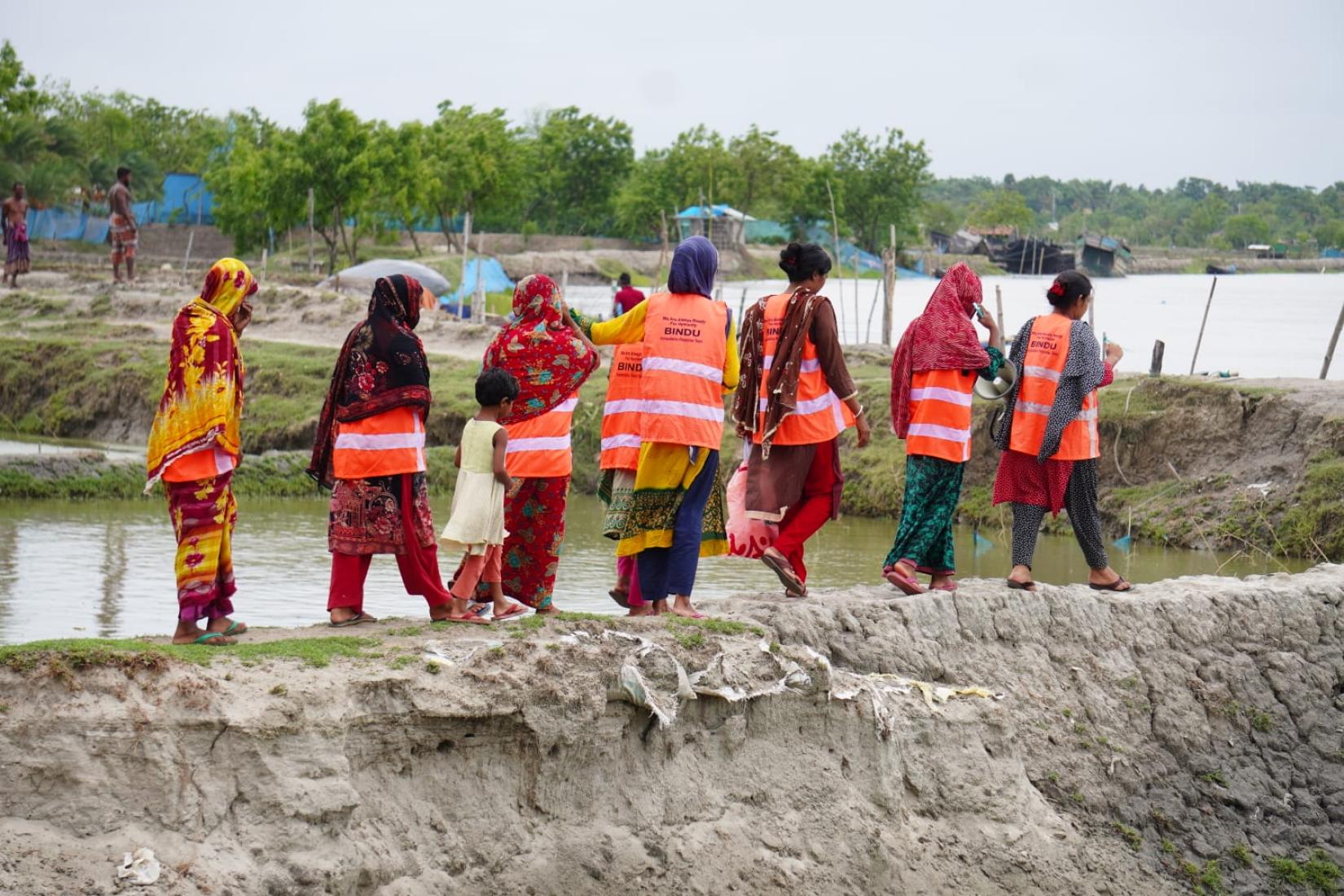
Bangladesh faces natural disasters more frequently than almost any other country in the world. Floods inundate large parts of the country every year. Powerful cyclones strike the coastal south. River erosion destroys homes and farmland. Droughts affect northern districts. Earthquakes are a growing concern in urban areas.
For a country of over 170 million people, many of them living in low-lying, flood-prone areas, disaster preparedness and relief are not optional extras. They are essential systems that protect lives, livelihoods, and the national economy.
Bangladesh has earned international recognition for how it handles disasters. Death tolls from major cyclones have fallen dramatically over the past four decades — from hundreds of thousands in 1970 and 1991 to a few hundred or less in more recent storms of comparable intensity. This progress reflects investment in early warning systems, cyclone shelters, community volunteer networks, and coordinated government and NGO response systems.
Social welfare programs complement disaster relief by addressing long-term vulnerabilities — poverty, hunger, disability, and lack of access to services — that make people more susceptible to disaster impacts.
This article explains disaster relief and social welfare programs in Bangladesh. It covers the key systems, notable success stories, the role of government and NGOs, and what the future holds for a country on the front lines of climate change.
What Is Disaster Relief and Social Welfare in Bangladesh?
Disaster relief Bangladesh refers to the coordinated actions taken before, during, and after a natural disaster or emergency to protect lives, reduce suffering, and help affected communities recover. It includes early warning systems, evacuation, emergency food and shelter, medical care, and long-term rehabilitation support.
Social welfare Bangladesh refers to broader government and non-government programs that support the wellbeing of vulnerable populations — including the poor, elderly, disabled, women, and children — in both normal times and after crises. Social welfare programs aim to reduce poverty, improve health and nutrition, provide income support, and build community resilience.
Together, disaster relief and social welfare form a protective layer around Bangladesh’s most vulnerable communities. They reduce both immediate suffering and long-term vulnerability.
Key institutions involved include the Department of Disaster Management (DDM) under the Ministry of Disaster Management and Relief, the Bangladesh Meteorological Department, the Cyclone Preparedness Programme (CPP), the Department of Social Services, and a large number of NGOs and UN agencies including the United Nations Office for the Coordination of Humanitarian Affairs (OCHA), the World Food Programme (WFP), and UNICEF.
According to the United Nations, Bangladesh is frequently cited as a global model for disaster risk reduction and community-based preparedness.
History and Background
Bangladesh’s relationship with disasters is as old as the country itself. The Bengal Delta — formed by the Ganges, Brahmaputra, and Meghna rivers — is one of the most flood-prone regions on earth. Cyclones from the Bay of Bengal have struck the coast for centuries.
The most devastating disaster in modern history was Cyclone Bhola in November 1970, which struck then-East Pakistan. It killed an estimated 300,000 to 500,000 people. The government’s inadequate response to the disaster deepened political tensions and contributed to the independence movement that led to Bangladesh’s creation in 1971.
In the years after independence, Bangladesh experienced repeated catastrophic disasters — the 1974 famine, major floods in 1988, and Cyclone 1991, which killed around 138,000 people. Each disaster exposed gaps in response systems and drove improvements.
After the 1991 cyclone, Bangladesh made a major commitment to disaster preparedness. The Cyclone Preparedness Programme (CPP) was expanded significantly. Tens of thousands of volunteer responders were trained in coastal communities. More cyclone shelters were built. Community warning systems were strengthened.
NGOs played a pioneering role in developing community-based disaster response. BRAC, Grameen Bank, and hundreds of local organizations built programs that combined immediate relief with longer-term recovery and livelihood support. International NGOs including CARE, Oxfam, and Save the Children established strong operations in Bangladesh.
The 1998 floods — which submerged two-thirds of the country for three months — tested the system severely. The response, though imperfect, demonstrated how far Bangladesh had come. Death tolls were far lower than in previous comparable floods. Food distribution, emergency shelter, and health programs reached millions of people.
Cyclone Sidr in 2007 and Cyclone Aila in 2009 further tested and refined Bangladesh’s systems. Both caused significant damage and displacement but death tolls — measured in thousands rather than hundreds of thousands — reflected the effectiveness of early warning, evacuation, and emergency response.
Current Situation in Bangladesh
Today, Bangladesh has one of the most developed disaster management systems among low-income countries. It operates on a multi-layered model combining government agencies, NGOs, community volunteers, and international partners.
The Department of Disaster Management coordinates national response. District and upazila-level disaster management committees exist in every part of the country. These local committees are responsible for preparedness, early warning dissemination, evacuation coordination, and relief distribution.
The Cyclone Preparedness Programme deploys over 76,000 trained volunteers in coastal communities. These volunteers receive weather warnings, alert communities, coordinate evacuations, and provide first aid. They are predominantly drawn from the same communities they serve, which makes the system highly trusted and effective.
Bangladesh has over 4,000 multipurpose cyclone shelters across coastal districts. These shelters protect people and livestock during cyclones and serve as schools and community centers in normal times. Their capacity has been a critical factor in reducing cyclone deaths.
The Early Warning System, operated by the Bangladesh Meteorological Department and the Flood Forecasting and Warning Centre (FFWC), provides advance notice of floods and cyclones. Warnings are disseminated through radio, television, mobile SMS, community loudspeakers, and the CPP volunteer network.
Social welfare programs run alongside disaster response. The Department of Social Services manages allowance programs for the elderly, widows, people with disabilities, and poor mothers. These programs provide ongoing support that reduces vulnerability and helps people recover faster after disasters.
Business and Economic Importance
Disaster relief and social welfare programs have significant economic importance for Bangladesh.
Protecting Productive Assets: Floods and cyclones destroy crops, livestock, fishing boats, equipment, and infrastructure. Effective relief programs help farmers and small business owners recover faster — replacing lost seeds, tools, and livestock. This prevents temporary disaster shocks from becoming permanent economic setbacks.
Reducing Business Disruption: Supply chains, road networks, and markets are all affected by major disasters. Effective disaster response and infrastructure repair programs help restore economic activity more quickly. Businesses that depend on rural markets and supply chains benefit when communities recover fast.
Attracting and Retaining Investment: Foreign investors and development partners assess a country’s disaster resilience before committing long-term investment. Bangladesh’s demonstrated ability to manage disasters — reducing death tolls and rebuilding quickly — improves its investment image and supports economic confidence.
Supporting Agriculture: Agriculture is a major part of Bangladesh’s economy. Floods and droughts damage crops, increase food prices, and reduce rural incomes. Early warning systems, disaster-resistant crop varieties, and post-disaster seed and input distribution programs help protect agricultural output and rural incomes.
Sustaining the Garment Industry: Factories in Dhaka and other cities can face disruption from severe flooding. Maintaining transport routes, power supply, and worker safety during floods is important for the garment industry — Bangladesh’s largest export earner and employer. Effective urban flood management directly supports industrial continuity.
Long-Term Poverty Reduction: Social welfare programs reduce the economic cost of poverty by improving health, nutrition, and education. Healthier, better-educated citizens are more economically productive. The reduction in vulnerability created by social welfare also reduces the economic cost of future disasters.
According to the World Bank, every dollar invested in disaster risk reduction saves multiple dollars in post-disaster recovery costs. Bangladesh’s experience demonstrates this principle in practice.
Key Programs and Success Stories
Cyclone Preparedness Programme (CPP)
The CPP is one of Bangladesh’s most celebrated disaster programs. It was established after the 1970 cyclone and has been continuously developed since. The program trains and deploys volunteer teams in coastal communities. Volunteers receive weather alerts from the Bangladesh Meteorological Department and immediately alert their communities through hand-operated sirens, flags, and direct communication.
Success story: During Cyclone Sidr in November 2007, the CPP mobilized over 42,000 volunteers who evacuated hundreds of thousands of people before the storm made landfall. Despite the cyclone being extremely powerful — among the strongest ever to hit Bangladesh — the death toll was around 3,400. Comparable cyclones decades earlier had killed hundreds of thousands. The CPP is widely credited with saving tens of thousands of lives.
Multi-Purpose Cyclone Shelters
The construction of over 4,000 cyclone shelters across coastal districts has transformed disaster outcomes in Bangladesh. Each shelter can accommodate hundreds of people and their livestock. The structures are built to withstand Category 4 cyclone winds and storm surge flooding.
Success story: During Cyclone Amphan in May 2020, over 2.4 million people were evacuated to cyclone shelters and other safe locations. The death toll in Bangladesh was around 26 people — an extraordinarily low figure given the cyclone’s power. The shelter network was the key factor in this outcome. The World Meteorological Organization acknowledged Bangladesh’s cyclone response as a global model.
Flood Early Warning and Response
The Flood Forecasting and Warning Centre (FFWC) provides advance flood forecasts for all major river systems in Bangladesh. Warnings give communities, local government, and NGOs time to prepare evacuations, move livestock, protect crops, and pre-position relief supplies.
Success story: During the severe floods of 2017 and 2019, early warning systems gave affected communities in Sylhet, Sunamganj, and northern Bangladesh advance notice that allowed significant preparation. Coordinated relief operations — distributing food, water purification tablets, and emergency shelter materials — reached millions of affected households within days. While the floods caused major damage, the death tolls and displacement were significantly lower than they would have been without the warning and response systems.
Vulnerable Group Development (VGD) and Post-Disaster Recovery
The VGD program, which provides food rations and skills training to poor rural women, serves as both a social welfare tool and a disaster recovery mechanism. After major floods or cyclones, VGD enrollment is expanded to include newly affected households. Women receive food support while they rebuild their lives and livelihoods.
Success story: After Cyclone Aila devastated the southwestern coastal districts in 2009, the VGD program was rapidly expanded in Khulna and Satkhira districts. Thousands of affected women received food support and skills training in livelihood activities suited to the saline-affected landscape — including crab fattening, duck rearing, and vegetable cultivation in raised beds. Within two years, many families had rebuilt their livelihoods despite the severe environmental damage caused by the cyclone.
Ashrayan Project for Displaced Families
The Ashrayan housing project provides land and homes to families displaced by river erosion, cyclones, and other disasters. It has resettled hundreds of thousands of homeless families in all districts of Bangladesh. Beneficiaries receive a home, land, and support for income-generating activities.
Success story: In coastal Bhola district, thousands of families who lost their homes to river erosion and cyclone damage were resettled through the Ashrayan Project. Families who had been living on embankments with no secure shelter moved into permanent homes with small plots for vegetable growing and small livestock. Community infrastructure — roads, tubewells, latrines, and schools — was built alongside the housing. Follow-up studies showed significant improvements in food security, income, and children’s school attendance among resettled families.
Cash Transfer Programs During Crises
The government and NGOs have increasingly used cash transfers as a rapid relief mechanism after disasters. Providing cash — rather than food or goods — allows affected households to buy exactly what they need from local markets. This also supports local traders and prevents market disruption.
Success story: During the COVID-19 pandemic in 2020, the Bangladesh government launched a rapid cash transfer program targeting poor urban and rural households that had lost income. Within weeks, millions of households received mobile banking payments through bKash and Nagad accounts. The speed of digital delivery and the ability to reach recipients without physical contact made this one of the fastest social protection responses in the country’s history.
BRAC’s Disaster Response and Recovery Programs
BRAC has been a central actor in disaster response and recovery in Bangladesh for over four decades. Its programs combine immediate relief with long-term livelihood recovery. After major disasters, BRAC deploys staff from its existing national network to affected communities quickly, distributing emergency kits, providing health services, and beginning livelihood support.
Success story: After the 2017 Rohingya refugee crisis — when over 700,000 people fled Myanmar and arrived in Cox’s Bazar — BRAC rapidly scaled up operations to serve both refugees and the host community. BRAC ran health clinics, learning centers for children, water and sanitation programs, and livelihood support for the local population affected by the sudden large influx. The organization’s pre-existing presence in the area allowed a faster and more effective response than was possible for organizations arriving from outside.
Trends in Disaster Relief and Social Welfare
Several important trends are shaping disaster relief Bangladesh and social welfare Bangladesh in the current period.
Climate Adaptation Integration: Relief programs are being redesigned to address not just acute disasters but slow-onset climate impacts — rising salinity, coastal erosion, and changing rainfall patterns. Programs now incorporate climate-resilient livelihoods, saline-tolerant crops, and raised homestead platforms as standard elements.
Digital Tools in Relief Delivery: Cash transfers via mobile banking, beneficiary registration through national ID systems, and real-time damage assessment through satellite and drone technology are all improving the speed and accuracy of disaster response.
Community-Led Preparedness: Programs increasingly involve communities in their own preparedness planning. Community Risk Assessments, local disaster management committees, and community-based early warning systems put decision-making power and capacity in the hands of people most at risk.
Urban Disaster Preparedness: As Bangladesh urbanizes rapidly, urban disaster preparedness — particularly earthquake preparedness in Dhaka — is a growing priority. Building safety regulations, search and rescue training, and urban flood management programs are expanding.
Mental Health and Psychosocial Support: Post-disaster mental health needs are increasingly recognized. Programs now include psychosocial support for disaster survivors, particularly children and women who experience trauma after major events.
Opportunities
Bangladesh’s disaster management and social welfare sector presents genuine opportunities for investment, partnership, and innovation.
Disaster-Resilient Infrastructure: There is a large need for more cyclone shelters, flood-resistant roads and embankments, and resilient housing in coastal and flood-prone areas. Government and international funding supports this, but private construction and engineering companies can contribute through contracts and partnerships.
Insurance Products for the Poor: Microinsurance products that protect poor households against disaster losses — covering crops, livestock, and household assets — are underdeveloped in Bangladesh. Designing and distributing affordable insurance products to rural households is both a commercial and social opportunity.
Agribusiness Resilience: Companies involved in agriculture, food processing, and rural supply chains can invest in disaster-resilient practices — flood-tolerant seed varieties, elevated storage facilities, and diversified supply chains. This protects business continuity and supports rural communities.
Technology for Relief: Digital platforms, biometric registration, drone-based damage assessment, and predictive flood modeling are all areas where technology companies can partner with the government and NGOs to improve disaster response.
Social Enterprise Models: Organizations that combine commercial activity with social welfare outcomes — such as providing clean water, solar energy, or affordable food to poor communities — have strong models in Bangladesh and room to scale.
Challenges
Despite significant progress, serious challenges remain in Bangladesh’s disaster relief and social welfare systems.
Climate Change Escalation: Climate change is intensifying floods, cyclones, and sea-level rise. The frequency and severity of extreme weather events is expected to increase. This will put greater pressure on relief and welfare systems at a time when Bangladesh is also managing other development priorities.
Urban Vulnerability: Dhaka and other cities have large informal settlements that are highly vulnerable to floods, fires, and earthquakes. Urban disaster preparedness lags behind the rural cyclone response system. Building this capacity is urgent.
Post-Disaster Recovery Gaps: Immediate relief is generally well organized. But the transition from emergency relief to long-term recovery and livelihood rebuilding often has gaps. Many households receive help in the first weeks after a disaster but do not receive the sustained support needed to fully recover.
Coordination Among Actors: Bangladesh has hundreds of organizations involved in disaster response — government agencies, national NGOs, international NGOs, UN agencies, and community groups. Coordinating these actors to avoid duplication and fill gaps is a persistent challenge.
Funding Volatility: International humanitarian funding flows can be unpredictable. When donors shift attention to other crises, Bangladesh may receive less support even during significant disaster events.
Data and Targeting: Identifying the most affected and most vulnerable households after a disaster requires good data. In some cases, benefits reach less-affected households while the most severely affected are missed. Improving real-time damage assessment and beneficiary registration is an ongoing priority.
Future Outlook in Bangladesh
Bangladesh’s disaster management system will continue to evolve in response to climate change and development needs. The country has committed to the Sendai Framework for Disaster Risk Reduction — the global framework for reducing disaster losses — and is embedding disaster risk reduction into its national development plans.
The government’s eighth Five-Year Plan includes substantial investment in disaster-resilient infrastructure, improved early warning systems, and expanded social protection. The Mujib Climate Prosperity Plan sets out Bangladesh’s strategy for turning climate vulnerability into climate resilience and development opportunity.
According to the United Nations Development Programme (UNDP), Bangladesh is increasingly sharing its disaster management expertise with other vulnerable countries. This reflects the depth of experience and innovation that Bangladesh has built over decades of managing extreme weather.
Digital systems will become more central to disaster response. Better data on household vulnerability, faster damage assessment after disasters, and digital delivery of relief and welfare benefits will all improve the speed and accuracy of the response system.
The shift from disaster response toward disaster risk reduction — preventing and reducing losses before disasters happen — is a clear policy direction. Investments in flood embankments, coastal protection, early warning infrastructure, and community preparedness training all reduce future costs.
Conclusion
Bangladesh has transformed its disaster relief and social welfare systems from inadequate colonial-era structures into internationally recognized models of effectiveness. The dramatic reduction in disaster death tolls — from hundreds of thousands in major storms to a few hundred or fewer — is one of the most compelling development success stories in the world.
The country’s cyclone preparedness volunteers, multipurpose shelter networks, early warning systems, and rapid relief operations have saved hundreds of thousands of lives. Social welfare programs have supported millions of vulnerable people in both ordinary times and the aftermath of crises.
These successes did not come easily. They required sustained government commitment, strong NGO partnerships, community participation, and decades of learning from each disaster. They also required resources — from Bangladesh’s own budget and from international partners.
Challenges ahead are real. Climate change is increasing the frequency and severity of extreme weather. Urban vulnerability is growing. Long-term recovery support needs strengthening. But the foundation that Bangladesh has built is strong.
For businesses and investors, understanding and supporting disaster resilience is both a social responsibility and a commercial interest. Resilient communities are better customers, suppliers, and workers. Investing in resilience — through infrastructure, insurance, agribusiness, and technology — creates both social and economic value.
For Bangladesh as a nation, the work of building a more resilient and equitable society continues. The success stories are real. The work is ongoing.
Frequently Asked Questions (FAQ)
1. Why is disaster management so important for Bangladesh? Bangladesh is one of the world’s most disaster-prone countries due to its low-lying geography, proximity to the Bay of Bengal, and dense population. Floods, cyclones, and river erosion affect millions of people every year. Effective disaster management reduces death, displacement, and economic loss.
2. How has Bangladesh reduced cyclone death tolls so dramatically? Bangladesh reduced cyclone deaths through the Cyclone Preparedness Programme’s volunteer network, the construction of over 4,000 cyclone shelters, improved early warning systems, and better community preparedness. Death tolls have fallen from hundreds of thousands in 1970 to hundreds or fewer in recent comparable cyclones.
3. What is the Cyclone Preparedness Programme (CPP)? The CPP is a national program that trains and deploys over 76,000 volunteers in coastal communities. These volunteers receive weather warnings and alert their communities through sirens and direct communication, coordinating evacuations before cyclones make landfall. It is considered one of the most effective community-based disaster programs in the world.
4. What social welfare programs support disaster-affected families in Bangladesh? Key programs include the Vulnerable Group Development (VGD) program, the Ashrayan housing project, cash transfer programs, food rations through the Open Market Sale, and allowance programs for the elderly, widows, and people with disabilities. These programs both protect vulnerable people and support recovery after disasters.
5. What role do NGOs play in disaster relief in Bangladesh? NGOs are central to Bangladesh’s disaster response. BRAC, CARE Bangladesh, Oxfam, Save the Children, and hundreds of local organizations work alongside government agencies. They provide emergency relief, health services, water and sanitation, and long-term recovery support. Their community networks allow faster response than government alone.
6. What is the Ashrayan Project? The Ashrayan Project provides land and homes to homeless and landless families, including those displaced by river erosion and cyclones. It has resettled hundreds of thousands of families, providing permanent housing and support for income-generating activities. It is one of Bangladesh’s most visible disaster recovery programs.
7. How does Bangladesh’s early warning system work? The Bangladesh Meteorological Department and the Flood Forecasting and Warning Centre issue advance warnings of cyclones and floods. Warnings are sent through radio, television, mobile SMS, and the CPP volunteer network to coastal and flood-affected communities. The system gives communities time to evacuate and prepare.
8. How did Bangladesh respond to the COVID-19 pandemic as a social welfare challenge? The government launched rapid cash transfer programs, distributing payments through mobile banking platforms bKash and Nagad to poor urban and rural households that lost income. This was one of the fastest digital social protection responses in the country’s history, reaching millions of households within weeks.
9. What is Bangladesh doing to address climate change in its disaster programs? Bangladesh is integrating climate adaptation into disaster and welfare programs — including climate-resilient livelihoods, saline-tolerant crops, raised homestead platforms, and coastal protection infrastructure. The Mujib Climate Prosperity Plan sets out a national strategy for climate resilience and development.
10. What investment opportunities exist in Bangladesh’s disaster resilience sector? Opportunities include constructing disaster-resilient infrastructure, developing microinsurance products for rural households, providing technology for relief delivery and damage assessment, supporting agribusiness resilience, and building social enterprise models that combine commercial activity with disaster preparedness and community welfare.