

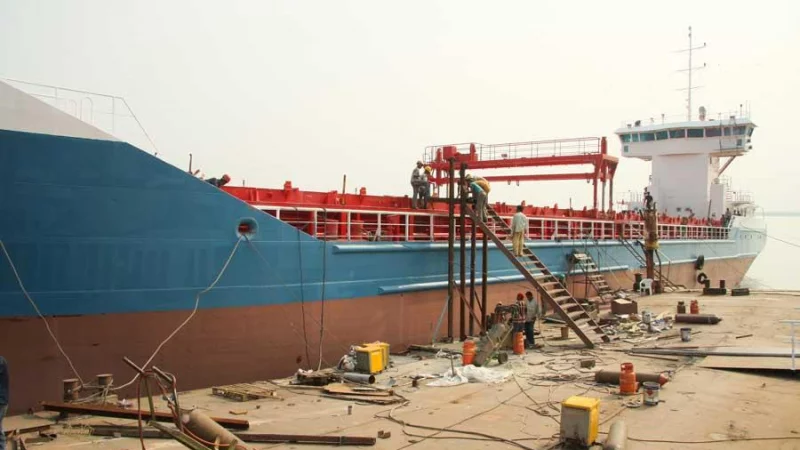
Bangladesh sits along one of the world’s most active river systems. The country has thousands of kilometers of navigable waterways. Rivers, canals, and coastal routes have shaped Bangladesh’s trade, transport, and culture for centuries. It is no surprise, then, that the country has developed a significant shipbuilding industry.
Shipbuilding in Bangladesh has grown from a small domestic trade into a recognized export industry. Bangladeshi shipyards now build oceangoing vessels for buyers in Europe, North America, and Asia. They produce cargo ships, container vessels, ferries, fishing boats, dredgers, and specialized craft. The industry has earned international quality certifications and competes on price and craftsmanship in global markets.
The shipbuilding sector contributes to the economy through export earnings, industrial employment, and the development of skilled engineering and manufacturing capacity. It supports linked industries including steel, paint, electrical equipment, and maritime services.
For a country working to diversify its manufacturing base beyond garments, shipbuilding is an important growth sector. It creates high-value jobs, uses locally available skills, and connects Bangladesh to global maritime trade.
This article explains the shipbuilding industry in Bangladesh — its history, current state, economic importance, key players, market trends, and the opportunities and challenges ahead.
What Is the Shipbuilding Industry in Bangladesh?
Shipbuilding refers to the construction of ships, boats, and other watercraft. It is a heavy manufacturing industry that requires engineering expertise, metalworking skills, large physical facilities, and significant capital investment.
In Bangladesh, shipbuilding covers the construction of both inland vessels — boats and ferries used on rivers and waterways — and oceangoing vessels for international trade. The industry is located primarily along the banks of major rivers near Dhaka and Chittagong, where access to water, labor, and raw materials is available.
Bangladeshi shipyards build a wide range of vessel types. These include general cargo ships, bulk carriers, container feeders, tugboats, passenger ferries, fishing trawlers, dredgers, patrol boats, and research vessels. Vessels are built both for domestic buyers — including the Bangladesh Inland Water Transport Authority (BIWTA) and the Bangladesh Navy — and for export clients in Europe and beyond.
The industry uses steel as its primary raw material. Most steel is currently imported, though local steel production is growing. Other inputs include marine-grade paint, electrical systems, navigation equipment, and marine engines — most of which are sourced from international suppliers.
According to the World Bank, Bangladesh’s manufacturing sector has significant potential for diversification. Shipbuilding is identified as one of the industries with the strongest growth trajectory outside of textiles and garments.
History and Background
Bangladesh has a long tradition of boat building. For centuries, skilled craftsmen built wooden boats on riverbanks across the country. These boats served as the primary means of transport across the delta’s vast network of rivers and waterways. The knowledge of hull design, timber selection, and caulking was passed down through generations of boatbuilding families in districts like Narayanganj, Barisal, and Khulna.
After independence in 1971, the government established the Khulna Shipyard as a state-owned enterprise to build and repair vessels for domestic use. The Bangladesh Inland Water Transport Corporation (BIWTC) required a steady supply of ferries and passenger vessels for the country’s river transport network. Khulna Shipyard became the primary builder and repairer of these government vessels.
During the 1980s and 1990s, a number of private shipyards began to emerge alongside the state-owned facility. These yards initially focused on small vessels for domestic use — fishing boats, river cargo boats, and small ferries. They employed traditional boatbuilding skills alongside newer steel fabrication techniques.
The major transformation came in the 2000s. Bangladesh began to attract orders for oceangoing vessels from European buyers, particularly from Denmark and Germany. These buyers were looking for cost-competitive shipbuilders with quality production capabilities. Bangladeshi yards offered labor costs significantly lower than established shipbuilding nations like South Korea, Japan, and China, while delivering vessels that met international quality and safety standards.
Western Marine Shipyard and Ananda Shipyard and Slipways became the pioneering exporters. They completed and delivered oceangoing vessels to Danish and German buyers — marking a turning point that put Bangladesh on the global shipbuilding map. These early successes attracted media attention, further orders, and investment in new shipyard capacity.
By the 2010s, Bangladesh had a growing cluster of export-oriented shipyards. The industry was recognized as a priority export sector by the government. The Export Promotion Bureau (EPB) began tracking shipbuilding exports alongside garments and seafood.
Current Situation in Bangladesh
Today, Bangladesh has around 150 to 200 registered shipbuilding companies, ranging from large export-oriented yards to small river boat builders. The major export-capable yards are located primarily in Dhaka (Narayanganj and Keraniganj areas) and Chittagong.
Key shipyards include Western Marine Shipyard, Ananda Shipyard and Slipways, Khulna Shipyard, Meghna Group’s shipbuilding division, Khan Brothers Shipbuilding, and DEW Group Shipbuilding. Several of these yards have received international quality certifications including ISO 9001 and class approvals from bodies like Bureau Veritas, Lloyd’s Register, and Det Norske Veritas (DNV).
Bangladesh exports vessels primarily to European countries. Denmark, Germany, the Netherlands, Belgium, and other EU nations have been regular buyers of Bangladeshi-built vessels. The types of vessels exported include general cargo ships of up to 7,000 deadweight tonnes (DWT), specialized vessels for dredging, and ferries.
Export earnings from the shipbuilding sector have grown significantly. In strong years, ship exports have reached several hundred million US dollars. The industry employs tens of thousands of workers directly — including welders, engineers, painters, electricians, and naval architects — and supports additional employment in supply chain industries.
The Bangladesh government has classified shipbuilding as a thrust export sector. This means it receives support through export incentives, bonded warehouse facilities for imported inputs, and promotional support from the EPB.
The Bangladesh Shipbuilders Association (BSBLA) represents the industry and advocates for policy support, training programs, and market development. Naval architecture and marine engineering programs at universities like Bangladesh University of Engineering and Technology (BUET) and a small number of private universities supply technical graduates to the sector.
Business and Economic Importance
The shipbuilding industry contributes to Bangladesh’s economy in several meaningful ways.
Export Earnings: Ship exports earn foreign currency directly. In years of strong order flow, the sector contributes several hundred million dollars to Bangladesh’s export receipts. This diversifies export earnings away from garments and reduces overall export concentration risk.
High-Value Employment: Shipbuilding jobs are generally better paid than entry-level garment factory work. Welders, fabricators, marine engineers, electricians, and naval architects earn wages that reflect their skill levels. The industry creates a pathway for workers to develop and apply technical skills that are in demand both domestically and internationally.
Industrial Ecosystem Development: A growing shipbuilding sector develops linked industries. Steel fabricators, marine paint suppliers, electrical equipment manufacturers, and port service providers all benefit from shipyard activity. This industrial ecosystem effect multiplies the economic impact of the sector.
Technology Transfer: Working with international buyers and meeting international classification standards exposes Bangladeshi shipbuilders to advanced engineering practices, quality management systems, and production technology. This knowledge transfer raises technical standards across the industry.
Infrastructure for Maritime Trade: Domestic shipbuilding capacity supports Bangladesh’s maritime trade infrastructure. Vessels built locally for BIWTC, BIWTA, and the Bangladesh Navy reduce the foreign exchange spent on imported vessels. This has direct fiscal value for the government.
Demonstration Effect for Diversification: The shipbuilding industry demonstrates that Bangladesh can successfully export complex, high-value manufactured goods — not just labor-intensive products like garments. This strengthens the case for investing in other manufacturing sectors and builds confidence among policymakers and investors in Bangladesh’s industrial capabilities.
Key Components and Types of Shipbuilding
Oceangoing Cargo and Commercial Vessels
The export-oriented segment of the industry focuses on building oceangoing vessels — primarily general cargo ships, bulk carriers, and container feeders. These vessels are built to international maritime standards and must receive class certification before delivery. They are the highest-value products built by Bangladeshi yards.
River and Inland Waterway Vessels
Bangladesh has an enormous domestic market for inland waterway vessels. Passenger ferries, cargo boats, launches, and speedboats serve the country’s vast river network. Most of these vessels are built by small and medium-sized yards using steel and traditional skills. This segment serves the Bangladesh Inland Water Transport Corporation and private operators.
Government and Naval Vessels
Khulna Shipyard builds and repairs vessels for the Bangladesh Navy, Coast Guard, and government agencies. This includes patrol boats, survey vessels, and utility craft. Government procurement provides stable order flow for the state-owned yard.
Fishing Vessels and Trawlers
Fishing trawlers and boats are built for both the domestic fishing industry and for export. Bangladesh’s large fishing sector creates demand for vessels of various sizes. Some yards have developed specialized capacity for building steel-hulled fishing trawlers.
Dredgers and Specialized Craft
Dredgers are used to remove silt and maintain river channels. Bangladesh’s rivers require constant dredging to remain navigable. Some local yards build dredging vessels for BIWTA and private operators. Specialized craft including research vessels, water buses, and service boats are also produced.
Ship Repair and Maintenance
Alongside new construction, ship repair is a significant activity. Chittagong port and the surrounding area has a cluster of ship repair yards. Vessels calling at Chittagong can access repair and maintenance services. This segment generates revenue and employs skilled workers even in periods of lower new construction activity.
Market Trends in Bangladesh
Several important trends are shaping the shipbuilding industry in Bangladesh.
Growing European Demand for Cost-Competitive Vessels: European shipping companies continue to look for cost-effective shipbuilders. Labor costs in traditional shipbuilding nations — South Korea, Japan, and increasingly China — have risen. Bangladesh offers significantly lower labor costs while maintaining acceptable quality. This keeps Bangladesh competitive for small and medium-sized vessel orders.
Green Shipping Requirements: International maritime regulations are tightening on emissions and environmental performance. The International Maritime Organization (IMO) has set targets for reducing shipping’s carbon footprint. Bangladeshi shipbuilders are beginning to adapt by building vessels designed for lower fuel consumption and alternative fuels. This trend will shape vessel design requirements going forward.
Increasing Vessel Complexity: Buyers are increasingly requesting more complex, higher-specification vessels. This requires upgrading design capabilities, investing in new equipment, and training workers in advanced fabrication techniques. Yards that invest in capabilities will move up the value chain.
Domestic Market Growth: Bangladesh’s own river transport network needs continuous investment. The government’s plans to expand river transport as part of its broader transport strategy will generate orders for ferries, cargo vessels, and infrastructure support craft.
Workforce Skill Development: The industry is investing in training to develop more skilled welders, pipe fitters, marine engineers, and naval architects. Technical and vocational training programs specifically for the shipbuilding sector are being developed with government and donor support.
Digital Design and Production: Modern shipbuilding uses computer-aided design (CAD) software, 3D modeling, and digital production management tools. Bangladeshi yards are gradually adopting these technologies to improve design accuracy, reduce errors, and speed up production.
Opportunities
The shipbuilding industry in Bangladesh offers significant opportunities for growth, investment, and export expansion.
Expanding to New Markets: Bangladesh currently exports primarily to Europe. There is significant opportunity to expand into new markets — including Southeast Asia, Africa, the Middle East, and South Asia. Growing economies in these regions need vessels for fishing, transport, and trade.
Moving Up the Value Chain: Currently, most Bangladeshi exports are small to medium vessels. Building larger, more complex, and higher-value vessels — including offshore support vessels, larger bulk carriers, and specialized craft — would significantly increase export earnings per vessel.
Backward Integration into Steel: Most steel used in Bangladeshi shipbuilding is imported. Developing domestic marine-grade steel production would reduce import costs, improve supply chain reliability, and increase the local value added in each vessel built.
Ship Recycling Complement: Bangladesh is already the world’s largest ship recycling (ship breaking) nation. Integrating ship recycling and shipbuilding into a broader maritime industry cluster — sharing infrastructure, steel supply, and skilled workers — could create significant efficiency gains and economic synergies.
Investment in Shipyard Modernization: Many Bangladeshi yards still use relatively basic infrastructure. Investment in modern dry docks, cranes, fabrication equipment, and digital design tools would increase production capacity and allow yards to build larger and more complex vessels.
Naval Architecture Education: Expanding naval architecture and marine engineering education in Bangladesh would create a stronger domestic talent pipeline. Graduates who can design vessels locally reduce dependence on foreign design services and increase the technical sophistication of the industry.
Export Financing Facilities: Developing specialized export financing products for shipbuilding — including buyer credit facilities and export credit guarantees — would help Bangladeshi yards compete for larger orders where buyers need financing support.
Challenges
The shipbuilding industry in Bangladesh faces a number of significant challenges that limit its growth.
Competition from Larger Shipbuilding Nations: South Korea, China, and Japan dominate global shipbuilding. They have far larger yards, more advanced technology, deeper financing capacity, and stronger government support. Competing with them for large vessel orders is very difficult. Bangladesh must focus on niches — small to medium vessels, specific vessel types, and cost-sensitive buyers.
Steel Import Dependence: The reliance on imported steel increases costs and creates supply chain risk. Currency fluctuations and global steel price movements directly affect the competitiveness and profitability of Bangladeshi shipbuilders.
Limited Design Capability: Most Bangladeshi shipyards build to designs provided by the buyer or by foreign naval architecture firms. Developing in-house design capability is expensive and takes time. This limits the types of vessels yards can offer and reduces the value added domestically.
Working Capital and Financing: Shipbuilding requires significant upfront investment in materials and labor before the vessel is delivered and payment is received. Securing affordable working capital finance is a challenge for many yards, particularly smaller ones. High interest rates in Bangladesh compared to competitor countries add to costs.
Regulatory and Certification Compliance: Meeting international maritime safety and environmental standards requires ongoing investment and expertise. Keeping up with changing regulations from the IMO and international classification societies adds compliance costs.
Infrastructure Gaps: Some yards lack deep-water access, adequate crane capacity, or large dry dock facilities needed to build bigger vessels. Infrastructure investment requires significant capital.
Skilled Worker Shortage: While Bangladesh has a large labor force, the supply of workers with specialized shipbuilding skills — particularly advanced welders, pipe fitters, and marine engineers — is limited. Training programs need significant expansion.
Future Outlook in Bangladesh
The future of the shipbuilding industry in Bangladesh looks positive, with the right investment and policy support in place.
The global shipping industry continues to need new vessels. Older vessels are being retired and replaced. Environmental regulations are driving demand for newer, cleaner ships. Bangladeshi yards are positioned to capture a share of this demand — particularly for small and medium commercial vessels.
Government support for the sector has been growing. The inclusion of shipbuilding in the list of thrust export sectors means access to export incentives, bonded warehouse facilities, and EPB promotional support. The government’s broader industrial policy encourages diversification away from garment dependence.
According to Trading Economics, Bangladesh’s export base has been gradually diversifying. Shipbuilding is one of several non-garment sectors showing consistent export growth.
The potential integration of shipbuilding with ship recycling — already Bangladesh’s dominant maritime industry — offers a path to a more comprehensive maritime industrial cluster. Recovered steel from scrapped ships could supply new construction. Skills developed in recycling can transfer to construction. Infrastructure could be shared.
Regional maritime trade is growing. Southeast Asia, South Asia, and Africa all have increasing demand for commercial vessels. Bangladesh’s geographic position, competitive costs, and growing reputation for quality give it a realistic chance to expand its share of these markets.
If Bangladesh can address the challenges of steel supply, design capability, financing, and workforce skill, the shipbuilding industry has the potential to grow into a billion-dollar export sector — creating tens of thousands of quality jobs and establishing Bangladesh as a genuine global shipbuilding nation.
Conclusion
The shipbuilding industry in Bangladesh has come a long way. From traditional wooden river boats to internationally certified oceangoing cargo vessels delivered to European buyers, the sector has demonstrated real capability and ambition.
It is an industry built on Bangladesh’s natural advantages — a river-navigating culture, a large and trainable workforce, competitive labor costs, and a strategic location on major maritime trade routes. It has produced pioneers like Western Marine and Ananda Shipyard who proved that Bangladesh could compete globally in heavy manufacturing.
The industry faces real challenges — competition, steel dependence, design limitations, and financing constraints. But it also has genuine strengths and a clear growth path. With continued investment, policy support, and skills development, Bangladesh’s shipbuilding sector can expand significantly in both volume and value.
For investors, the sector offers opportunities in shipyard modernization, steel supply, technical training, and export financing. For policymakers, it is a model of industrial diversification that deserves continued support. For Bangladesh’s economy, it represents a meaningful step toward a more diverse, skilled, and resilient manufacturing base.
The ships that leave Bangladeshi yards carry more than cargo. They carry the story of a country building its industrial future one hull at a time.
Frequently Asked Questions (FAQ)
1. What types of ships are built in Bangladesh? Bangladesh builds general cargo ships, bulk carriers, container feeders, passenger ferries, fishing trawlers, dredgers, patrol boats, tugboats, river launches, and specialized government and naval vessels. Export-focused yards primarily produce oceangoing cargo vessels for European buyers.
2. Which are the major shipyards in Bangladesh? Leading shipyards include Western Marine Shipyard, Ananda Shipyard and Slipways, Khulna Shipyard, Khan Brothers Shipbuilding, and DEW Group Shipbuilding. Several of these hold international quality certifications from bodies like Bureau Veritas, Lloyd’s Register, and DNV.
3. Which countries buy ships from Bangladesh? Bangladesh exports vessels primarily to European countries including Denmark, Germany, the Netherlands, and Belgium. There is growing interest in expanding exports to Southeast Asia, Africa, and the Middle East.
4. How much does Bangladesh earn from ship exports? In strong years, Bangladesh’s ship exports have reached several hundred million US dollars. The sector is classified as a thrust export industry by the government and receives export incentives and promotional support.
5. What is the connection between Bangladesh’s ship recycling and shipbuilding industries? Bangladesh is the world’s largest ship recycling (ship breaking) nation, primarily in Chittagong. The two industries share proximity, labor pools, and potentially steel supply. Integrating them into a broader maritime industrial cluster could create significant efficiency gains and economic synergies.
6. What certifications do Bangladeshi shipyards hold? Leading export-oriented shipyards have received ISO 9001 quality management certification and class approvals from international maritime classification societies including Bureau Veritas, Lloyd’s Register, and Det Norske Veritas (DNV). These certifications are required for delivering vessels to international buyers.
7. What are the main challenges facing Bangladesh’s shipbuilding industry? Key challenges include competition from larger shipbuilding nations, dependence on imported steel, limited in-house design capability, working capital financing constraints, infrastructure gaps in some yards, and a shortage of workers with specialized shipbuilding skills.
8. What government support does the shipbuilding sector receive? Shipbuilding is classified as a thrust export sector, giving it access to export incentives, bonded warehouse facilities for imported materials, and promotional support from the Export Promotion Bureau. The government has included shipbuilding in its industrial diversification priorities.
9. What investment opportunities exist in Bangladesh’s shipbuilding sector? Opportunities include investing in shipyard modernization and infrastructure, domestic marine-grade steel production, naval architecture education and training programs, export financing facilities, and the development of design capabilities within local yards.
10. What is the future outlook for shipbuilding in Bangladesh? The outlook is positive. Global demand for new vessels continues, green shipping regulations are driving vessel replacement cycles, and Bangladesh’s cost competitiveness remains strong. With investment in skills, infrastructure, and design capability, the sector has potential to grow into a billion-dollar export industry.